
Skills before Competition: A Lower Pressure Start to Basketball in Lower Hutt


Have you ever watched your child being coached in sport and felt like they were being asked to backflip into the room before anyone had taught them how to do a roly-poly?
The team might be learning spacing, transition or how to move within an offence.
Meanwhile, your child is still trying to dribble without travelling, coordinate the steps of a layup or work out what to do when the ball reaches them (without crying in the process).
The session has started at step six while they are still standing at step one.
Sometimes the issue is not that a child is not listening or trying. They are being asked to use skills nobody has had enough time to properly teach them yet.
A game is not always the easiest place for kids to learn basketball
A basketball game asks a beginner to process a lot at once.
They need to dribble, pass, catch, shoot, defend, find space, follow the rules, listen to their coach and react to everyone moving around them.
When those foundations are missing, children can repeatedly lose the ball, travel, miss the same layup or stand in the wrong place - and someone around the court is always yelling while this is happening too.
Nobody is intentionally punishing the child.

But when every attempt ends in losing the ball, being called for a violation or being corrected again, it can begin to feel that way.
The withdrawal from sport can be shown in different ways too. Some children become frustrated. Some act silly. Some avoid the ball. Others withdraw and appear as though they are no longer interested.
It becomes even harder for a soft entry for children entering basketball at an older age. From around nine onwards, there are often more rules to understand, more experienced players around them and less room to learn through mistakes.
Sometimes the child does not need to play another game.
They need the game slowed down and the missing step properly taught.
School coaches are being asked to do a lot
School and community coaches are often managing drastically different skill levels, player behaviour, team culture, technical development and preparation for competition—all within one short weekly session.
Many are volunteers. For some, it may be their first year coaching.
Even an experienced coach cannot rebuild every child’s dribbling, footwork and shooting foundations while also teaching the whole group how to function as a team.
The same challenge appears at representative level. Talented athletes may arrive without key basketball foundations, but an eight-week tournament build-up leaves little time to start again from the beginning.
A coach can only work with the skills currently in front of them.
This is why some coaches who have come through Skillset encourage players from their school teams to attend development sessions. It gives the child more time to work on individual gaps while the school coach can focus on helping the team play together.
Skills training is not a criticism of competitive coaches.
The two environments simply have different jobs.
Lower pressure does not mean lower expectations
A lower-pressure programme is not a place where children are never challenged.
It means the challenge is introduced in the right order.
A coach can remove the defender, slow down the movement, separate the footwork from the ball, explain the skill from another angle and gradually add pressure back in.
Sometimes it takes several different explanations or activities before something clicks.
What works immediately for one child may make no sense to another.
Being corrected is not always the same as being taught.
Good skills coaching helps a child understand what went wrong and gives them a realistic next step towards improving it thats tailored to them.
Small adjustments can change the game
One Lower Hutt parent told us their child had previously been scoring around four points a game, if that.
After attending a Skillset session focused on spacing and learning how to move without the ball, he began averaging around 15 points a game for the rest of the season.
He had not suddenly become a completely different athlete.
A few small adjustments helped him understand where to move, why it mattered and how to become more involved in the game.
That context made the skills he already had far more useful.
Stories like this are regular feedback from Skillset parents. Sometimes the biggest improvement does not come from learning a flashy move. It comes from an experienced coach helping a child understand the game in a way that finally makes something click.
Games become much more enjoyable when children feel able to participate rather than simply trying to survive them.
What skills training does differently

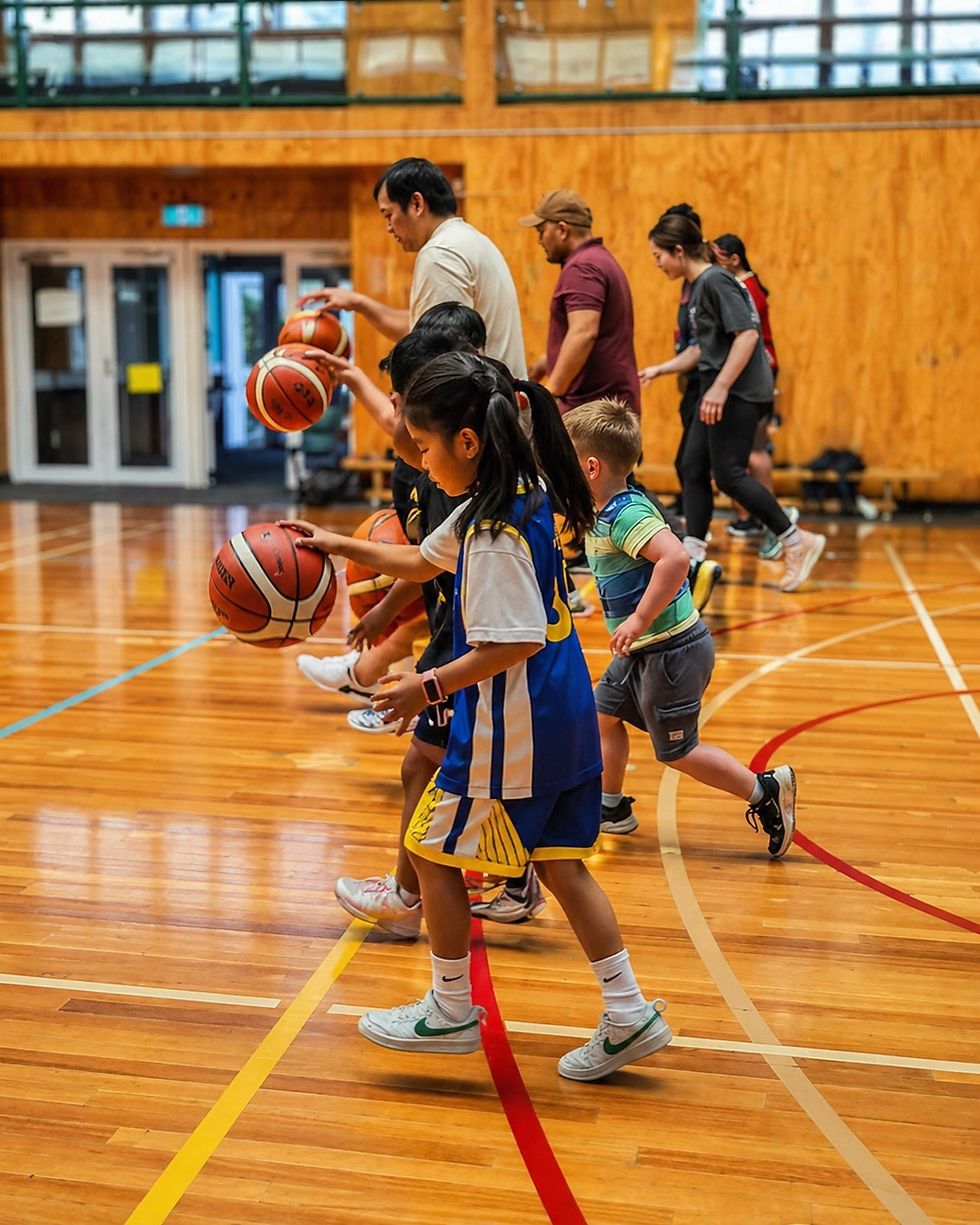
Skillset Lower Hutt, our small groups give coaches more time to notice individual gaps and work one-on-one with players when needed.
Children will usually have their own ball, giving them more opportunities to practise rather than waiting for one turn in a long line.
Our training is also structured so skills build upon each other.
Coaches technically break down a skill, give children time to repeat it without pressure and then gradually introduce it into more game-like situations.
We also use different activities and constraints to encourage children to apply a skill when it is not happening naturally.
Families often notice visible improvement within the first four weeks. Much of that early change comes from confidence: the child understands the environment, knows what is being asked and feels increasingly capable of attempting it.
Skills training and competition work together
Children do not need to be highly skilled before they are allowed to join a team.
Competition can provide friendship, belonging, excitement and opportunities to apply what they are learning.
But many children enjoy competition more when they have first had enough time, repetition and coaching to understand the skills the game expects them to use.
A child may attend skills training before joining their first team, alongside school basketball or between competitive seasons.
Competition shows children what the game requires.
Skills training gives them time to learn how to do it.
Most families who join Skillset Lower Hutt are simply looking for a positive way to introduce their child to basketball.
Our programme at Taita College gives children space to build their fundamentals, learn from experienced coaches and become more confident before—or alongside—the pressure of competition.
Your child does not need to arrive already knowing how to play.
They may simply need an environment willing to begin at step one.
Explore our Lower Hutt basketball programmes (Or our other locations), take the Skillset programme quiz or book a trial to find the right starting point for your child.


Comments